

Table of Contents
Autonomous Meaning: What It Really Means in Simple Words
You have probably seen the word “autonomous” in news about self-driving cars or AI agents. But what does autonomous actually mean? In short, autonomous means something that can act, decide, or function on its own without outside control. It comes from the Greek words “autos” (self) and “nomos” (law), so the word literally means “self-governing” or “having its own laws.”
In this guide, we will break down the autonomous meaning in plain English, show how it is used in daily life, and explain why this word matters so much in today’s tech world.
What Does Autonomous Mean?
At its core, autonomous describes a person, group, machine, or system that works independently. It does not need someone else to control every move it makes.
According to the Cambridge Dictionary, autonomous means “independent and having the power to make your own decisions.” Merriam-Webster gives a similar idea, describing it as having the right or power of self-government, or being undertaken without outside control.
So when you call something autonomous, you are saying it can run, think, or govern itself without someone standing over it giving orders every step of the way.
Where Does the Word Autonomous Come From?
The word has old roots. It comes from the Greek “autónomos,” meaning “with laws of one’s own” or independent, formed from “auto” (self) and “nomos” (law). The word first appeared in English between 1790 and 1800.
This history matters because it shows the word was never just about machines. For centuries, autonomous described countries, regions, and people who governed themselves without a ruler from outside.
Autonomous Meaning in Everyday Use
The word shows up in many parts of daily language. Here are the main ways people use it.
1. Autonomous as Self-Governing
This is the oldest and most common use. An autonomous country, organization, or group governs or controls itself rather than being controlled by anyone else. A good real-world example is Vatican City, which sits inside Rome but runs its own laws and government.
2. Autonomous as Independent Thinking
When talking about a person, autonomous means they make their own choices without being pushed by others. An autonomous person makes their own decisions rather than being influenced by someone else. Teachers often want students to become autonomous learners, meaning kids who study and solve problems on their own.
3. Autonomous in Technology
This is where the word gets the most attention today. In tech, autonomous describes machines or software that can complete tasks with little or no human help. Dictionary.com defines this use as a machine or device that is able to operate with little or no human control or intervention.
This brings us to the part most readers searching this term actually want to understand.
Autonomous Meaning in AI and Technology
Technology has given the word “autonomous” a fresh and bigger meaning. In AI, autonomous does not just mean a machine follows a script. It means the system evaluates context, chooses a plan, acts, and learns from feedback to improve future performance, rather than just running a fixed routine.
Autonomy in AI does not mean total freedom with no rules. It means the system operates within set limits and policies while needing less constant human input. Three things define this kind of autonomy:
- Minimal supervision – the system finishes tasks without needing approval at every step.
- Adaptability – it can change its approach when new data or conditions show up.
- Context awareness – it understands rules, risks, and limits before it acts.
Real Examples of Autonomous Technology
You interact with autonomous systems more often than you might think. Some common examples include:
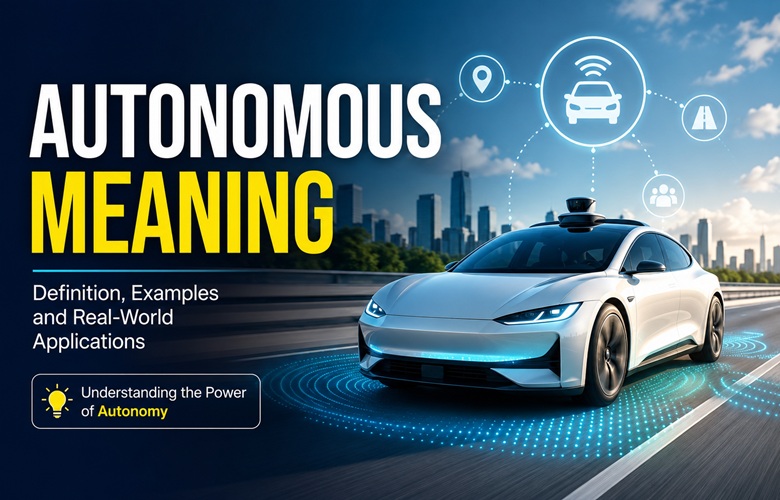
- Self-driving cars: Autonomous vehicles use sensor hardware to detect objects around them and send that data to algorithms that decide how the car should move. Cars are graded on levels of autonomy, from basic driver assistance up to full self-driving.
- AI agents: These are autonomous intelligent software tools that take a basic goal from a person and build a plan with steps to reach that goal.
- Smart home devices: Thermostats and security systems that adjust on their own based on patterns they learn.
- Drones and robots: Machines that can complete delivery or inspection tasks while making real-time decisions.
- IT and customer service bots: Systems that detect problems, fix them, or handle customer requests from start to finish without a human stepping in for every case.
This shows that autonomous technology is not one single thing. It is a spectrum, ranging from simple automation to systems that plan and act almost entirely on their own.
Autonomous vs Automatic: What Is the Difference?
Many people mix these two words up, but they are not the same.
- Automatic means a machine follows a fixed set of steps every time. It does the same thing in the same way, with no real decision-making involved. A washing machine is automatic.
- Autonomous means the system can judge a situation and choose how to respond. It adapts. A self-driving car deciding to brake for a pedestrian who suddenly crosses the road is autonomous behavior, not just automatic.
In short: automatic follows instructions, while autonomous makes choices.
Synonyms and Related Words
If you want other ways to describe something autonomous, you can use:
- Independent
- Self-governing
- Self-ruling
- Self-directed
- Sovereign
- Self-sufficient
The opposite of autonomous is “heteronomous” or simply “dependent,” meaning something controlled by an outside force.
Why Understanding Autonomous Meaning Matters Today
Knowing this word matters because autonomy is shaping the future of work, transport, and daily life. Cars, software tools, and even business processes are becoming more autonomous each year. When you understand what autonomous really means, you can better judge news stories, product claims, and tech reports that use this word.
For example, when a company says its software is “autonomous,” you now know to ask: how much human input does it still need? What rules limit its actions? This kind of thinking helps you separate real innovation from simple marketing talk.
Frequently Asked Questions
Autonomous means something that works or makes decisions on its own, without needing outside control. It can describe a country, a person, or a machine.
A self-driving car is a clear example. It senses the road, judges traffic, and makes driving decisions without a person controlling every move.
No. Automatic means following the same fixed steps every time. Autonomous means the system can judge a situation and adjust its response.
Autonomous AI is software that can plan, act, and learn from results to complete a goal, with little need for constant human guidance.
It comes from the Greek words “autos” (self) and “nomos” (law), meaning “self-governing” or having one’s own laws.
The opposite is dependent or heteronomous, meaning something controlled by an outside force rather than itself.
Final Thoughts
The autonomous meaning is simple at its core: something that works, decides, or governs on its own, without constant outside control. Whether it is a country, a student, or a self-driving car, the same idea applies. The word has grown from describing self-ruled nations to describing some of the smartest technology we use today.
If you want to read more about how autonomous systems and AI agents are shaping the tech industry, check out more guides on iTech Magazine.
