

Table of Contents
In the vast and ever-expanding realm of search engine optimization (SEO), keywords are the foundational building blocks that connect users to relevant content. Effectively optimizing keywords on your web pages can significantly enhance your on-page SEO success, leading to increased visibility, higher rankings, and improved organic traffic. In this article, we will explore the key strategies for maximizing the power of keywords and unleashing their potential for on-page SEO success.
Conduct Comprehensive Keyword Research
Keyword research forms the bedrock of any successful on-page SEO strategy. Begin by brainstorming a list of relevant topics and terms that align with your website’s content and target audience. Use keyword research tools like Google Keyword Planner, SEMrush, or Moz Keyword Explorer to identify high-volume, low-competition keywords. Look for long-tail keywords that have a specific focus and can attract more targeted traffic to your website.
Focus on Relevance and User Intent
While keywords are essential, it’s crucial to prioritize relevance and user intent when optimizing your content. Google’s algorithm has become increasingly sophisticated in understanding user queries and providing the most relevant results. Create content that aligns with the intent behind specific search queries. Consider the search intent types – informational, navigational, transactional, or commercial investigation – and tailor your content to address these intents effectively.
Optimize Title Tags and Meta Descriptions
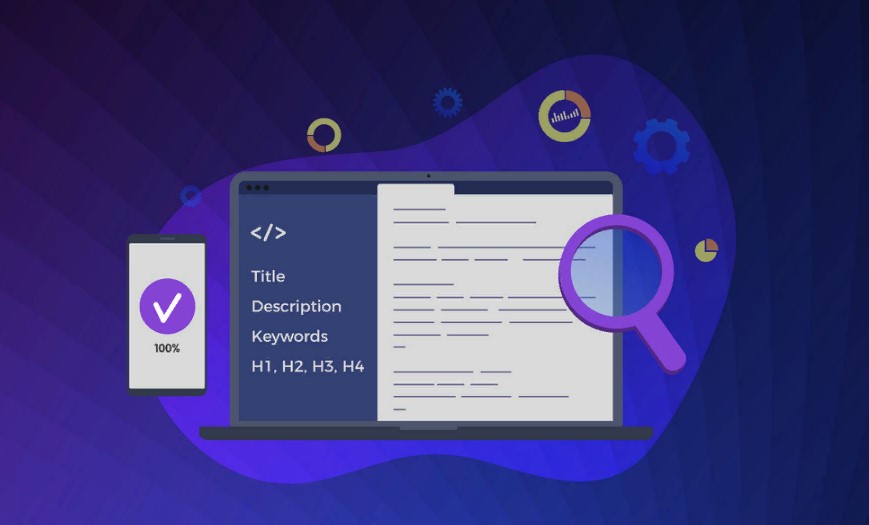
Title tags and meta descriptions are critical on-page elements where keywords should be strategically placed. Craft compelling and concise title tags (ideally 50-60 characters) that accurately reflect the page’s content and include relevant keywords. Similarly, meta descriptions should be engaging and persuasive, providing a brief summary of the page’s content and enticing users to click. Incorporate keywords naturally within these elements, but avoid keyword stuffing, as it can negatively impact user experience and search rankings.
Create Keyword-Rich Content
When crafting your content, aim for a balanced approach that incorporates keywords naturally and provides value to your audience. Start by including the primary keyword in the introductory paragraph and throughout the content, focusing on variations and related terms. However, avoid overusing keywords, as it can lead to keyword stuffing and make your content seem unnatural. Instead, focus on producing high-quality, comprehensive, and engaging content that satisfies user intent while naturally incorporating relevant keywords.
Read More:
Optimize Heading Tags (H1, H2, H3):
Heading tags play a crucial role in structuring your content and signaling its hierarchy to search engines. Use the H1 tag for the main heading, incorporating your primary keyword when relevant. Employ H2 and H3 tags for subheadings and incorporate related keywords or variations. This not only helps search engines understand your content better but also enhances readability for users, making your content more scannable and engaging.
Improve URL Structure
Optimizing your URL structure can further bolster your on-page SEO efforts. Create descriptive, concise, and keyword-rich URLs that accurately reflect the page’s content. Avoid long, complex URLs that offer no meaningful information to users or search engines. Use hyphens to separate words within the URL, making it more readable for both humans and search engine crawlers.
Leverage Image Optimization
Images are an integral part of web content and can contribute to improved user engagement. When optimizing images, ensure they are appropriately compressed to reduce page load time. Rename image files using descriptive and keyword-rich filenames, and utilize alt text to provide search engines with context about the image’s content. Incorporating relevant keywords in alt text helps search engines understand the image and can potentially enhance its visibility in image search results.
Implement Internal Linking
Internal linking is not only a valuable navigational tool for users but also a way to signal the importance and relationship between different pages on your website. When creating content, include relevant internal links to other related pages on your website. Use anchor text that incorporates keywords to provide additional context and improve the overall internal linking structure. This allows search engines to discover and index your other pages more efficiently, while also distributing ranking authority throughout your website.
Prioritize User Experience (UX)
User experience is an increasingly critical factor in search engine rankings. Ensure your web pages load quickly, as slow-loading pages can lead to higher bounce rates and lower rankings. Optimize your website for mobile devices, as the majority of searches now originate from mobile devices. Make your content easy to read and navigate by using proper formatting, bullet points, and subheadings. Engaging, user-friendly websites tend to have longer visit durations, lower bounce rates, and higher chances of attracting natural backlinks, all of which contribute to improved SEO performance.
Stay Updated and Adapt
SEO is an ever-evolving field, and search engine algorithms constantly change. Stay informed about the latest trends and updates in SEO to ensure your keyword optimization strategies remain effective. Regularly monitor your website’s performance using analytics tools, and make adjustments as needed. Adapt to emerging trends and technologies, such as voice search, mobile-first indexing, and schema markup, to stay ahead of the curve and maintain a competitive edge.
Conclusion
In conclusion, keyword optimization is a fundamental component of on-page SEO success. By conducting thorough keyword research, prioritizing relevance and user intent, and strategically incorporating keywords throughout your content, you can maximize the power of keywords to improve your website’s visibility, rankings, and organic traffic. Combine this with a focus on user experience and adaptability to stay ahead in the dynamic world of SEO. Remember, on-page SEO is just one aspect of a comprehensive SEO strategy, so continue to explore other off-page and technical SEO factors to achieve holistic optimization.
